
Oil & gas doesn’t slow down because a PO got complicated. Yet that’s exactly what happens when your bill of materials depends on long, fragile supply chains—especially in a tariff environment where costs can shift mid-project and lead times can change without notice.
Recent reporting tied to a Deloitte analysis warned that U.S. tariffs can raise material and service costs for oil and gas projects by 4% to 40%, and may contribute to delays and deferrals for major developments. That’s not a “finance team problem.” That’s a schedule risk that lands on engineering, procurement, and project management—right when owners and operators want faster installs, tighter documentation, and fewer field surprises.
At the same time, steel and aluminum trade actions have remained a moving target. Multiple sources note that Section 232 tariffs on steel and aluminum were increased to 50% in 2025 (with limited exceptions such as the UK rate staying at 25%), adding uncertainty for anything that touches metal inputs and derivative products.
The result: projects get squeezed from both sides—higher input costs and less predictable delivery windows. That’s where domestic, rapid-turn fabrication and machining becomes more than a convenience. It becomes a competitive advantage.
Below is a practical playbook for how domestic rapid-turn partners reduce risk—plus the specific capabilities that matter when you’re building or maintaining oil & gas equipment, skids, supports, and specialty parts.
The new reality: volatility is now part of the spec
If you’re still treating supply chain disruption like a “black swan,” your Gantt chart is going to keep losing arguments with reality.
McKinsey’s supply chain risk pulse notes that tariffs dominated supply chain leaders’ attention in 2025, pushing companies toward tactical moves like supplier negotiations, inventory shifts, and nearshoring—because the environment has been unusually volatile. Meanwhile, analysis reported by AP flagged that tariff changes can raise operating costs for U.S. factories, even when companies buy domestically, because pricing pressure ripples through the market.
And for oil & gas specifically, cost escalation isn’t theoretical: more expensive steel, aluminum, copper, and specialized components can ripple into fabrication, machining, logistics, and installation windows.
So what do you do when volatility becomes a baseline assumption?
You reduce the number of steps where volatility can hit you.
Why domestic rapid-turn manufacturing wins in oil & gas
Lead time stops being a gamble
When parts are coming from overseas, your lead time isn’t just “manufacturing time.” It’s:
- production slotting
- port and carrier variability
- customs clearance
- tariff classification surprises
- inland freight constraints
- damage claims and rework delays
Domestic rapid-turn changes that equation. The strongest advantage is simple: fewer links in the chain means fewer ways the chain breaks.
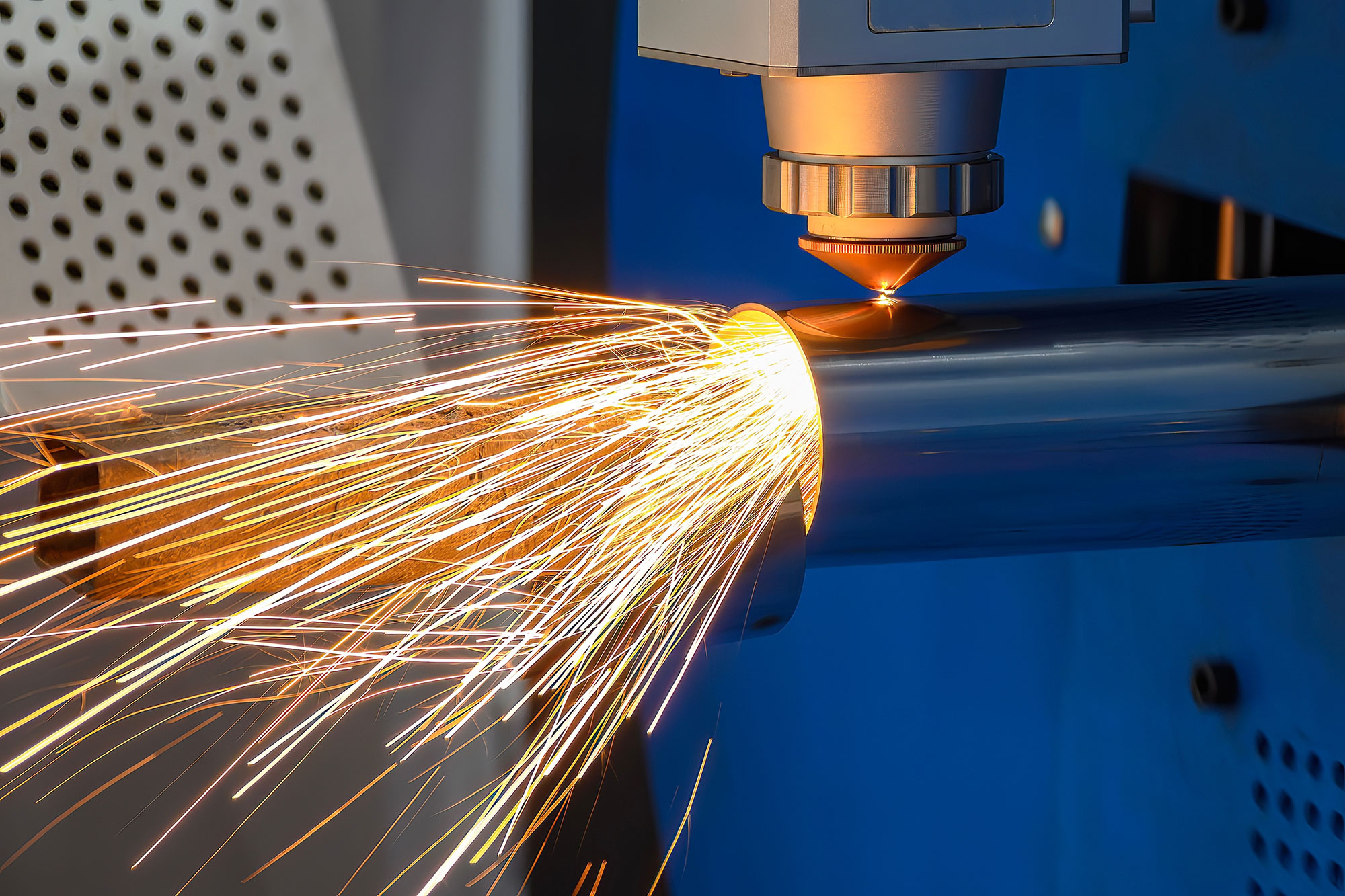
Rapid Turn Laser & Machine positions its model around speed—often completing laser cut projects within 24 hours, and in special cases offering same-day turnaround. In oil & gas, that matters for:
- outage and turnaround support
- unplanned maintenance events
- late engineering changes
- “we need it yesterday” field fixes
When schedule pressure is real, domestic capacity that can move immediately becomes a form of insurance.
Tariff exposure shrinks—and pricing becomes more controllable
Tariffs can hit your project two ways:
- directly (duties on imported materials/parts)
- indirectly (domestic prices climb due to reduced competition or scarcity)
Recent sources point to Section 232 steel/aluminum tariff increases and expansions that can affect a wide set of metal inputs and derivative products.
Working with a domestic rapid-turn manufacturer doesn’t eliminate market pricing pressure—but it can:
- reduce dependency on imported finished goods
- reduce the number of cross-border transactions exposed to duty and reclassification risk
- shorten the time window between quote and delivery (so you’re not pricing a part today that ships months later)
Put bluntly: shorter cycle times mean less time for policy to change underneath you.
Engineering changes don’t turn into project change orders
Oil & gas builds are famous for revisions—instrument changes, nozzle orientation updates, revised supports, “we found an interference,” “client wants access moved,” and so on.
When your supplier is overseas, even minor updates create:
- longer approval cycles
- re-quoting delays
- re-shipping costs
- schedule slips that cascade into trades onsite
Domestic rapid-turn shifts you from “batch and wait” to iterate and deliver. That’s especially powerful when your partner can handle multiple steps in one place: laser cutting, forming, drilling/tapping, welding, assembly, and identification.
Rapid Turn lists in-house/resourced capabilities including bending/forming up to 12’ (240 tons), drilling/tapping, welding (TIG/MIG/Stick), AWS D1.1, assembly, part identification, and hardness testing.
Fewer handoffs = fewer delays when the drawing changes.
Quality and documentation get easier, not harder
Oil & gas procurement doesn’t just buy a part. It buys:
- repeatability
- inspection confidence
- traceability
- documentation readiness
Domestic manufacturing helps because audits, in-person visits, and documentation follow-up become more realistic. It’s easier to:
- review first articles quickly
- resolve NCRs without international back-and-forth
- validate weld procedures, fit-up, and inspection points
- document part identification consistently
Rapid Turn specifically highlights part identification and hardness testing—two capabilities that translate directly into procurement confidence for harsh-service environments and documented builds.
Where “rapid-turn” matters most in oil & gas
Turnarounds, outages, and emergency maintenance
If you support plants, terminals, or midstream assets, you already know the math: downtime costs are ugly. Waiting on a bracket, baseplate, guard, custom adapter, or replacement component can hold up a much bigger scope.
Rapid-turn domestic fabrication supports:
- replacement parts when OEM lead times are unacceptable
- repair brackets and reinforcement plates
- fabricated supports and mounts
- custom access panels, guards, and enclosures
- skid modifications and “make it fit” updates
Skids and packaged systems
Skids are booming because owners want predictable installs and faster deployment. But skids also punish late parts. If the frame is ready and one laser-cut mount plate is delayed, everything gets jammed up.
Domestic rapid-turn helps keep skid builds moving, especially when your partner can cut thick plate, form long lengths, and weld to code. Rapid Turn lists large format laser capacity (160” x 80”) and cutting up to 3/4″ in carbon, stainless, and aluminum.
“Boring” parts that become critical at the worst moment
The parts that blow up schedules are rarely glamorous:
- gussets
- pipe supports
- clamp plates
- spacer blocks
- base plates
- access covers
- small brackets that exist solely to mount something else
Domestic rapid-turn shines here because you can get precision profiles without tooling delays, and you can adjust quickly when field measurements differ from drawings.
Practical procurement playbook: how to use domestic rapid-turn to reduce risk
Build a “tariff-risk” category into sourcing decisions
Flag parts that are:
- metal-heavy
- imported today
- long-lead
- high change-order likelihood
- needed early for fabrication/assembly
Those are your top candidates to move into domestic rapid-turn sourcing.
Design for manufacturability to shorten the cycle
Your domestic partner can only move as fast as the drawing package allows. Speed comes from clarity:
- provide STEP + DXF when possible
- call out material grade and thickness clearly
- define tolerances only where they matter
- specify finish/coating needs upfront
- state inspection requirements early (dimensional checks, hardness, marking)
This is where a rapid-turn shop becomes a true partner—because DFM feedback early prevents rework later.
Use blanket POs and quick-release ordering for repeat items
For recurring components (mount plates, brackets, supports), consider:
- pre-approved pricing tiers
- stored programs/nesting plans
- scheduled releases aligned to turnarounds
That reduces administrative lag and converts “quote delay” into “ship date.”
Consolidate steps to reduce handoffs
Every handoff adds risk. If you can combine:
- laser cutting + forming + tapping
- welding + assembly
- identification + testing
…you cut down on schedule drift.
Rapid Turn’s service list is built for that consolidation: cutting, forming, machining steps like drilling/tapping, welding to AWS D1.1, assembly, and value-added services via approved partners.
What to look for in a domestic rapid-turn fabrication partner
Use this as your selection checklist:
- Speed with proof (not just “we’re fast”)
- Capacity for thick plate and large formats for oil & gas structures
- Forming capability for long parts and structural consistency
- Welding capabilities + standards alignment
- In-house testing and identification for documented builds
- Ability to handle prototypes and production runs without changing vendors
Rapid Turn lists rapid-turn delivery (often 24 hours), large format capacity, thick-plate cutting, long forming capability, AWS D1.1 welding, hardness testing, and part identification—exactly the mix that reduces field and procurement risk.
FAQs
Can domestic fabrication still be affected by tariffs?
Yes. Domestic prices can still shift when tariffs impact upstream inputs or overall market supply.
However, domestic rapid-turn sourcing can reduce cross-border delays and compress the quote-to-delivery
window—meaning less time for policy or logistics changes to disrupt your schedule.
What parts should oil & gas companies source domestically first?
Start with metal-heavy, long-lead, and high-revision items—plus anything needed early to keep fabrication
and assembly moving (supports, plates, brackets, base frames, mounts, adapters, guards, and access covers).
These items often create outsized schedule risk when delayed.
How does laser cutting help reduce project risk?
Laser cutting delivers precise profiles without tooling delays, which helps parts fit faster and reduces
rework during fit-up and welding. When paired with domestic rapid-turn delivery, laser cutting can keep
skid builds, repairs, and outage work on track.
What information speeds up quotes and lead times?
Provide clear material grade and thickness, quantity, critical tolerances (only where needed), finish/coating
requirements, and inspection needs. When possible, include clean CAD files (STEP) plus a DXF for laser profiles.
Clarity up front prevents re-quotes and change-order delays later.
Closing: turn volatility into an advantage
When policy shifts, shipping delays, and pricing swings become part of the environment, the winners aren’t the companies with the most optimistic schedules. They’re the companies with the most resilient execution.
Domestic rapid-turn fabrication and machining reduces risk by compressing time, consolidating steps, and keeping changes manageable—especially for oil & gas teams that live and die by schedule windows.