Every manufactured product begins with an idea, but the path from concept to finished part isn’t always linear. Some projects require a one-off prototype to prove feasibility. Others jump straight into mass manufacturing. And many fall somewhere in between — needing small batches, iterative testing, and gradual scale-up. Understanding the difference between custom prototyping and full production runs helps engineers, designers, and decision-makers choose the most efficient and cost-effective path.
This article breaks down both approaches, explains where each one shines, and helps you determine the right strategy for your timeline, budget, and goals.
What Is Custom Prototyping?
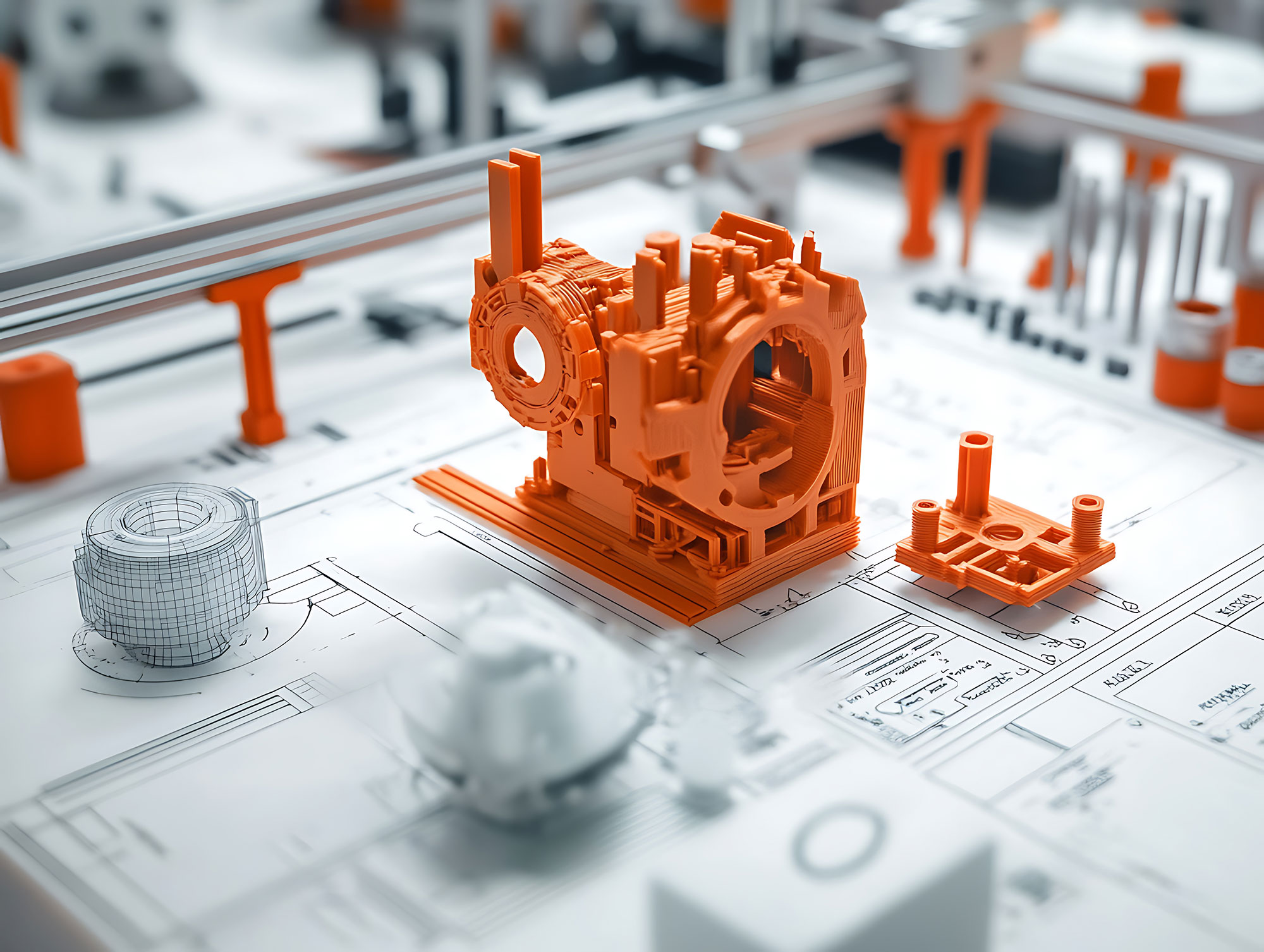
Custom prototyping is the process of creating an early version of a part or product, typically in low quantities, for the purpose of testing, validation, and design refinement. These prototypes may be rough functional parts or polished, near-production components depending on your needs.
Prototyping lets you touch, feel, test, and evaluate a design in the real world — something no CAD model or virtual simulation can fully replace. A physical prototype exposes issues early, long before they become expensive production-level mistakes.
Engineers often use prototypes to check ergonomics, fitment, performance, durability, manufacturability, or assembly behavior. Because prototypes are produced in low volume, manufacturers can focus on precision and flexibility without the overhead associated with mass production.
When Prototyping Makes the Most Sense
Prototyping is the smart choice when you’re not yet confident that a design is final, or when you expect the need for adjustments. It becomes essential when a project requires physical testing, field trials, or interaction between multiple assemblies.
If your design is brand new, untested, or highly complex, prototyping gives you the opportunity to tweak tolerances, adjust geometries, improve performance, or explore variations. It’s particularly helpful for applications involving tight clearances or moving components, where a few thousandths of an inch can determine whether something works flawlessly or binds under load.
Prototyping also reduces long-term risk. By exposing potential issues early, it lets you refine the design before spending money on full-scale production tooling, jigs, or fixtures. Companies that prototype effectively often shave weeks off their development timeline and dramatically reduce overall cost.
The Benefits of Custom Prototyping
One of the biggest advantages of prototyping is speed. Because the manufacturer doesn’t need to build complex fixtures, program multiple machine setups, or optimize production efficiency, prototypes can often be turned around quickly.
Another advantage is design freedom. If your first version needs changes, you can revise and re-run without committing to major production changes. This makes prototyping ideal for industries where innovation cycles move quickly, including aerospace technology, medical devices, robotics, consumer products, and industrial machinery.
Prototyping also gives you the chance to test different materials or thicknesses. A design that works in aluminum might behave differently in stainless steel or carbon steel. The prototype phase lets you explore options before locking in your production design.
Finally, prototypes are invaluable when presenting a concept to investors, customers, or internal stakeholders. A physical part communicates intent far more effectively than a slide deck.
What Is a Full Production Run?
A full production run involves manufacturing a finalized design in medium or high quantities using optimized processes, tooling, and workflow. At this stage, the design should be locked in, tolerances should be validated, and assembly requirements should be fully understood.
Production runs emphasize consistency, reliability, and cost efficiency. They often involve programming automated processes, building dedicated fixtures, planning multi-step workflows, and establishing quality checkpoints to ensure every part meets the same standard. The goal is to produce large quantities with minimal variation while controlling cost per unit.
Unlike prototyping, where one-off flexibility is key, production runs prioritize repeatability. If you need ten thousand parts that all fit exactly the same way, this is where you want to be.
When a Full Production Run Is the Right Choice
A production run is appropriate when your design is finalized and validated. You know the part works, you’ve tested it, and you’re ready to scale. Production runs work best when you have a predictable demand, whether for a long-term product line or for a short-term, high-volume delivery.
If the work requires specialized tooling, production jigs, or multi-step workflows, it usually only makes financial sense at scale. Once those tools are built and the process is stable, each additional unit becomes cheaper to produce. This is known as economy of scale, and it’s one of the major reasons companies commit to full production.
Production runs also shine when consistent quality is essential. When all your parts feed into critical assemblies — especially safety-sensitive systems — a controlled, optimized production environment ensures every part meets the same strict criteria.
The Benefits of Full Production Manufacturing
Consistency is the hallmark of a good production environment. Once your workflow is optimized and your machines are dialed in, each part rolls off the line with the same dimensions, finish, and performance characteristics.
Production runs also deliver cost efficiencies that prototypes simply cannot. While the upfront investment in tooling and machine programming may be higher, the cost per part drops dramatically once you reach higher volumes. If your product is expected to be produced for months or years, this approach provides the best long-term value.
Lead times often improve during production as well. Because the process becomes repeatable and predictable, scheduling becomes easier. If you need periodic batches or recurring deliveries, a production workflow keeps the supply chain flowing without disruption.
Another advantage is the ability to qualify materials and suppliers at scale. Production-grade sourcing helps eliminate variability, ensuring each run behaves exactly like the last.
The Transition From Prototype to Production
Most successful products follow a natural path: concept → prototype → validation → production. This transition is where many projects either gain momentum or stall, depending on how prepared they are.
As prototypes evolve, the fabricator evaluates how the part behaves during cutting, machining, bending, and welding. Challenges such as heat distortion, inconsistent alignment, or unexpected stress points may surface. A good partner helps you address these issues before scaling.
Once the prototype meets all criteria and performs as expected, it becomes the blueprint for the production run. At this point, the focus shifts from flexibility to repeatability. Tooling may be built, fixtures refined, and workflows optimized to streamline the upcoming batch.
This transition is smoother when the same shop handles both phases. Because they already understand the part, the material, and the challenges, they can scale efficiently without reinventing the process.
Key Differences Between Prototyping and Production
While prototyping and production share similar equipment and materials, their objectives diverge. Prototyping prioritizes speed, flexibility, and exploration, while production emphasizes consistency, cost efficiency, and volume. Prototypes tolerate change. Production avoids it. Prototypes encourage experimentation. Production rewards stability.
The difference becomes especially clear when examining the resources involved. A prototype might only require simple setups and limited inspection. A production run may need detailed process planning, multiple quality checkpoints, specialized jigs, and material traceability.
Even design intent evolves. During prototyping, a designer may adjust geometry based on testing or performance. During production, the goal is to freeze the design and reproduce it accurately at scale.
Factors That Determine Which Path You Should Choose
Choosing between prototyping and production depends on your goals, your timeline, your budget, and, ultimately, the maturity of your design.
If you are early in development or expect multiple iterations, prototyping is the smart choice. It lets you experiment without committing to large quantities. If you’re confident in the final design and need high volumes delivered predictably, production is the logical next step.
- Timelines also matter. If speed is your priority, a prototype can often be completed far faster than a full production run, simply because it doesn’t involve extensive setup or tooling. Production runs take more planning upfront, but once they begin, the output becomes far more efficient.
- Cost is another key factor. While the cost per part is higher during prototyping, it’s far cheaper than producing large quantities of a flawed design. On the other hand, if you already know exactly what you need, production runs serve you better by reducing the unit cost dramatically.
- The product’s end-use environment also influences the decision. If your part will face heavy loads, high temperatures, or precision-critical movement, you may need multiple rounds of prototypes before the design is ready.
How Rapid Turn Laser Supports Both Prototyping and Production
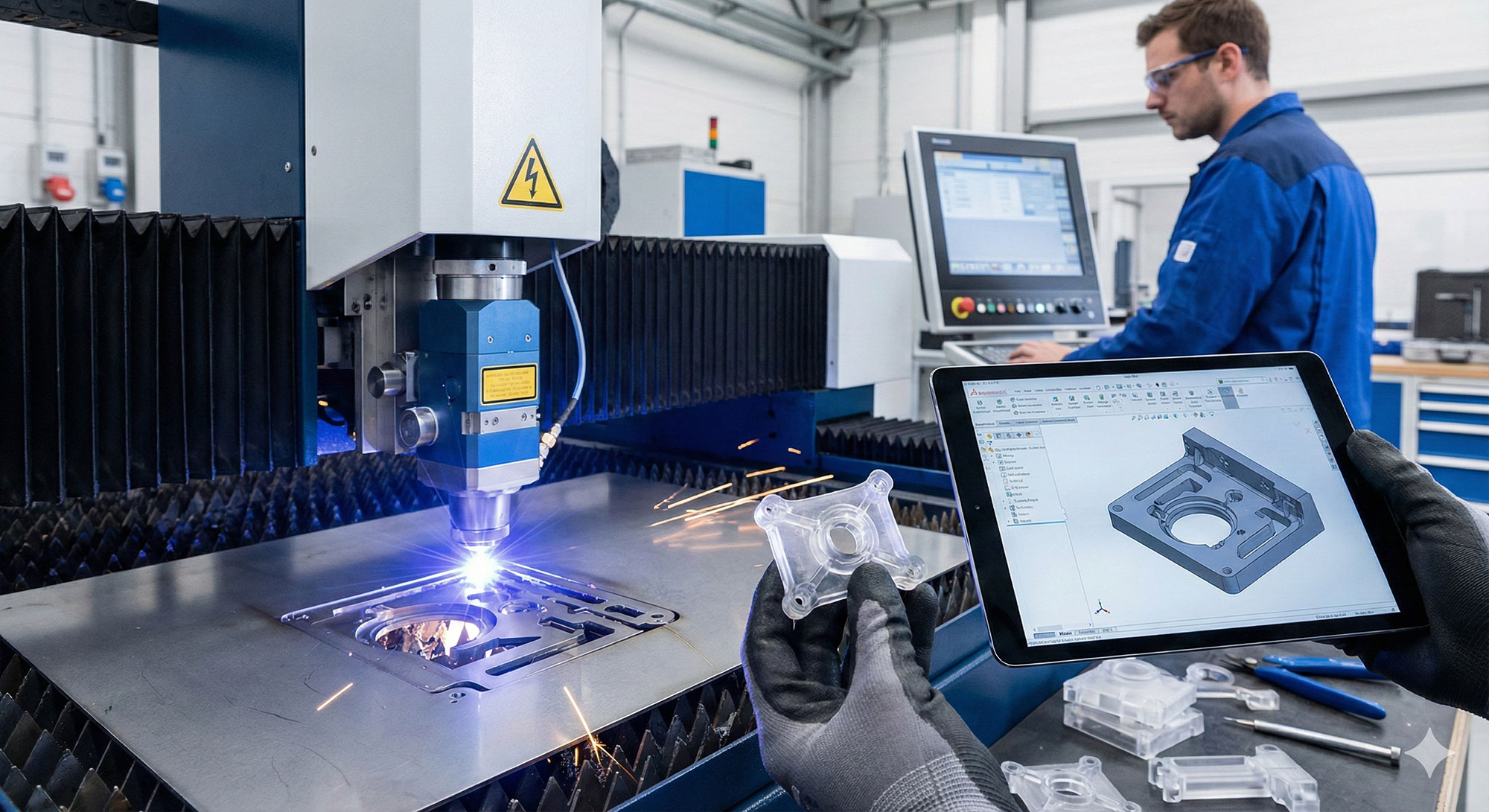
Rapid Turn Laser & Machine is built to handle both sides of the manufacturing spectrum. Our fiber laser systems, precision machining centers, and ISO 9001:2015 certified processes allow us to develop early-stage prototypes that meet engineering intent while simultaneously preparing for eventual production scaling.
Because we work across multiple industries — aerospace, automotive, robotics, clean energy, oil and gas, commercial equipment, and more — we understand how designs behave in real-world environments. We help customers refine prototypes by analyzing manufacturability, tolerance requirements, material behavior, and cost drivers.
When a design is ready to scale, our team transitions it into a repeatable workflow. We create fixtures, program optimized toolpaths, and establish quality checkpoints to ensure that every run meets the same high standard. This cradle-to-scale approach keeps your project moving smoothly from early development to mass production.
Determining the Best Approach for Your Project
The choice between prototyping and production isn’t always black and white. Many projects start as a loose concept, gradually move through several prototype cycles, and then shift into controlled production. Others require only minor prototyping before they’re ready for scale. A few require no prototyping at all — usually because the design is already proven.
The best approach depends on the level of certainty you have. If your design is still evolving, if you’re testing new materials, or if you’re exploring alternatives, prototyping keeps you agile. If your design is proven and your demand is clear, production reduces cost and increases efficiency.
More importantly, the right manufacturing partner helps you make the decision confidently. At Rapid Turn, we evaluate your goals and guide you toward the path that makes sense technically and financially. We’re not just fabricators — we’re educators, collaborators, and problem solvers.
The Right Path Starts With Clarity
Both custom prototyping and full production runs bring value, but they serve different purposes. Prototypes give you freedom to explore. Production gives you efficiency to scale. Together, they form the backbone of a successful manufacturing strategy.
The key is knowing when to shift from one phase to the other — and choosing a fabrication partner who understands the nuances of both. Rapid Turn Laser & Machine has the technology, expertise, and ISO-certified quality systems to support your project at every stage.
Whether you’re building a one-off prototype, preparing for a limited run, or gearing up for high-volume production, we’re ready to help you move from concept to creation with confidence and precision.